

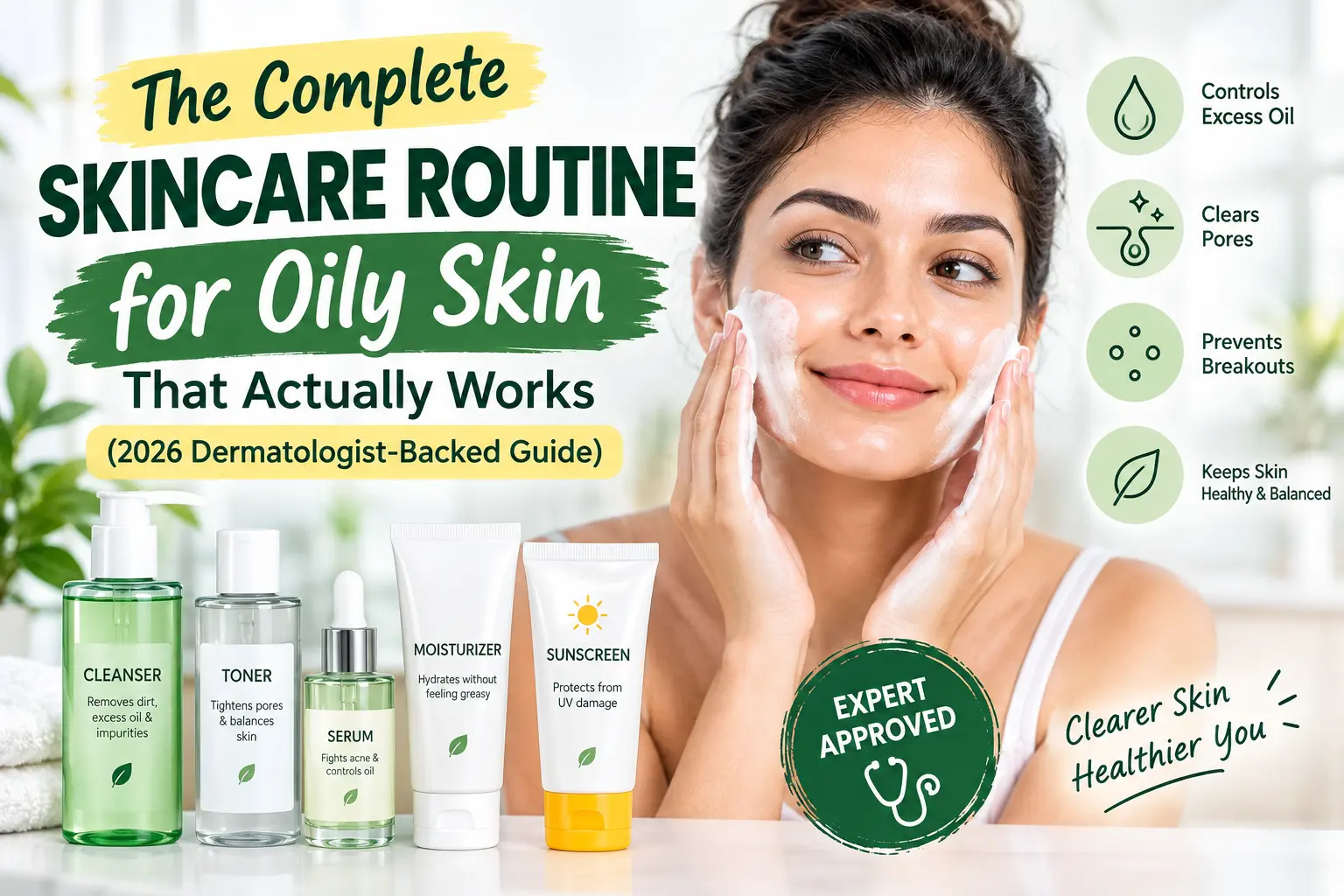
If you have oily skin, you already know the frustration. You wash your face, apply a light moisturizer, and by noon your T-zone looks like you dipped it in a deep fryer.
You’ve tried “oil-free” products, blotting sheets, and maybe even skipped moisturizer altogether hoping it would help (spoiler: it doesn’t).
The truth is, most generic skincare advice fails oily skin types because it treats oily skin as a problem to be punished rather than a skin type to be understood and balanced.
This guide breaks down a complete, science-backed skincare routine for oily skin — one that actually reduces shine, minimizes breakouts, shrinks the appearance of pores, and keeps your skin calm and balanced throughout the day. No fluff, no gimmicks — just what genuinely works.
1. Understanding Why Your Skin Produces Excess Oil
Before you can fix oily skin, you need to understand why it happens in the first place. Oily skin occurs when your sebaceous glands produce more sebum than your skin actually needs.
Sebum itself isn’t the enemy — it’s a natural, protective substance that keeps your skin hydrated, flexible, and shielded from environmental stressors. The problem starts when production goes into overdrive.
Several factors trigger excess sebum production:
- Genetics — If your parents had oily skin, there’s a strong chance you inherited the same sebaceous gland activity.
- Hormonal fluctuations — Androgens (a group of hormones) stimulate the sebaceous glands. This is why oily skin often intensifies during puberty, before menstrual cycles, or during periods of hormonal imbalance.
- Climate and humidity — Hot, humid environments increase oil production as a natural cooling and protective mechanism.
- Over-cleansing and stripping the skin — This is the big one. When you strip your skin of its natural oils too aggressively, it overcompensates by producing even more sebum to restore balance. This creates a frustrating cycle of oiliness and breakouts.
- Using the wrong products — Heavy, comedogenic (pore-clogging) products can trap oil beneath the skin’s surface, making the problem look and feel worse.
Understanding this is critical because the goal of a good oily skin routine is never to eliminate oil completely — it’s to regulate it. Products that promise to make your skin feel “squeaky clean” are often doing more harm than good.
2. The Biggest Mistakes People With Oily Skin Make
Before diving into the ideal routine, let’s clear up the missteps that keep oily skin stuck in a frustrating cycle:
- Skipping moisturizer. This is the number one mistake. Dehydrated skin signals your sebaceous glands to produce even more oil to compensate. Moisturizer is non-negotiable, even for the oiliest skin types.
- Over-washing your face. Washing more than twice a day strips your skin’s protective barrier and triggers a rebound effect of oil production.
- Using harsh, alcohol-based toners. These may feel “refreshing” in the moment, but they dry out the skin and worsen oiliness long-term.
- Skipping sunscreen because it feels greasy. Modern formulations exist specifically for oily skin — there’s no excuse to skip SPF.
- Over-exfoliating. Scrubbing your face raw doesn’t reduce oil; it damages your skin barrier and can actually increase breakouts and irritation.
- Chasing trends instead of consistency. Oily skin responds best to a consistent, minimal routine used correctly — not a rotating door of viral products.
3. The Morning Skincare Routine for Oily Skin
Your morning routine should focus on light hydration, oil control, and protection. Here is the ideal step-by-step order:
Step 1: Gentle, Foaming or Gel Cleanser
Choose a sulfate-free, pH-balanced gel or foam cleanser. Look for ingredients like salicylic acid (BHA) at a low concentration (0.5–2%), which penetrates oil and unclogs pores without over-drying. Avoid bar soaps and heavily fragranced cleansers, which disrupt your skin’s natural barrier.
Step 2: Alcohol-Free Toner
A good toner for oily skin should balance pH levels and deliver a light layer of hydration — not strip the skin. Look for niacinamide, witch hazel (alcohol-free formulations), or green tea extract, all of which help regulate oil production and calm inflammation.
Step 3: Lightweight, Hydrating Serum
This step is often skipped by people with oily skin, which is a mistake. A hyaluronic acid serum or niacinamide serum (5–10%) provides deep hydration without adding surface oil. Niacinamide in particular is a powerhouse ingredient — it visibly minimizes pores, controls sebum production, and strengthens the skin barrier over time.
Step 4: Oil-Free, Gel-Based Moisturizer
Yes, oily skin needs moisturizer — this cannot be emphasized enough. Choose a lightweight, oil-free, non-comedogenic gel moisturizer. Ingredients like hyaluronic acid, glycerin, and ceramides hydrate without adding grease, and a properly moisturized barrier actually reduces excess oil production over time.
Step 5: Broad-Spectrum SPF 30+ (Matte or Gel Formula)
Sunscreen is the single most important anti-aging step in any routine, and oily skin is no exception. Look for matte-finish, oil-free sunscreens — many modern formulas double as a primer, controlling shine while protecting against UV damage.
4. The Nighttime Skincare Routine for Oily Skin
Nighttime is when your skin repairs itself, making it the ideal window for active ingredients that target oil, texture, and breakouts.
Step 1: Double Cleanse (If Wearing Makeup or Sunscreen)
Start with an oil-based cleanser or micellar water to dissolve makeup, sunscreen, and the day’s buildup — yes, using oil to cleanse oily skin actually works, because “like dissolves like.” Follow with your regular gel cleanser to remove any residue.
Step 2: Treatment Serum (Active Ingredients)
This is where you introduce your actives — but only one category per night to avoid irritation:
- Salicylic acid (BHA) – Exfoliates inside the pore, reduces blackheads and breakouts.
- Retinol or retinoid – Regulates cell turnover, reduces oil production over time, and improves texture.
- Azelaic acid – Great for oily, acne-prone, and sensitive skin simultaneously; reduces redness and breakouts.
Alternate these throughout the week rather than layering them all at once.
Step 3: Lightweight Night Moisturizer
Even at night, stick to a gel-cream or lightweight lotion rather than a heavy, occlusive cream. Look for ceramides and squalane, which mimic your skin’s natural lipids without clogging pores.
Step 4 (Optional): Spot Treatment
For active breakouts, a targeted spot treatment with benzoyl peroxide or sulfur can speed up healing overnight without affecting the rest of your face.
5. Weekly Treatments That Make a Real Difference
Beyond your daily routine, a few weekly treatments can dramatically improve oily skin over time:
- Clay Masks (1–2x per week): Kaolin or bentonite clay masks absorb excess oil and draw impurities out of pores. Avoid using more than twice weekly, as overuse can dry out the skin and trigger rebound oiliness.
- Chemical Exfoliation (1–3x per week): A BHA (salicylic acid) exfoliating treatment is far gentler and more effective for oily, acne-prone skin than physical scrubs, which can cause micro-tears and irritation.
- Hydrating Sheet Masks (1x per week): Counterintuitive, but essential — a hydrating mask helps balance the skin and prevents the dehydration-triggered oil rebound mentioned earlier.
6. Key Ingredients That Control Oil (and Which to Avoid)
Ingredients to Look For:
- Niacinamide — regulates sebum, reduces pore appearance, anti-inflammatory
- Salicylic Acid (BHA) — oil-soluble exfoliant that clears pores from within
- Hyaluronic Acid — lightweight hydration without grease
- Zinc PCA — naturally regulates oil production
- Clay (Kaolin, Bentonite) — absorbs surface oil
- Retinoids — normalize cell turnover and reduce long-term oil production
- Ceramides — repair and strengthen the skin barrier
Ingredients to Avoid or Limit:
- Heavy mineral oils and petrolatum-based products — can clog pores
- Alcohol denat. (drying alcohols) — strips the skin and worsens oiliness
- Coconut oil — highly comedogenic for most oily/acne-prone skin types
- Fragrance-heavy products — can trigger irritation and inflammation, worsening oil production
7. How Diet and Lifestyle Affect Oily Skin
Skincare products alone aren’t the full picture. Your diet, stress levels, and daily habits play a significant role in how much oil your skin produces:
- High-glycemic foods (white bread, sugary snacks, soda) can spike insulin and increase sebum production.
- Dairy consumption has been linked in some studies to increased breakouts in acne-prone individuals.
- Chronic stress raises cortisol levels, which in turn stimulates the sebaceous glands.
- Dehydration ironically increases oiliness, as your skin overcompensates for lost moisture.
- Dirty pillowcases and phone screens transfer oil and bacteria back onto your skin daily — a small but often overlooked contributor to breakouts.
Simple changes like drinking more water, reducing processed sugar, managing stress, and washing your pillowcase weekly can meaningfully support your skincare routine.
8. Building a Routine for Combination and Acne-Prone Oily Skin
Many people with oily skin also deal with combination skin (oily T-zone, drier cheeks) or acne-prone skin. Here’s how to adjust:
- Combination skin: Apply a lightweight gel moisturizer everywhere, but layer a slightly richer cream only on drier areas like the cheeks.
- Acne-prone oily skin: Prioritize non-comedogenic labeling on every product, introduce salicylic acid or benzoyl peroxide gradually, and always follow active treatments with a barrier-supporting moisturizer to avoid over-drying, which can worsen acne.
9. Common Questions About Oily Skin, Answered
Should I moisturize if my skin is oily?
Yes — always. Skipping moisturizer triggers more oil production, not less. The key is choosing an oil-free, lightweight, non-comedogenic formula.
How many times a day should I wash oily skin?
Twice daily — once in the morning and once at night. Washing more frequently strips the skin and worsens oiliness.
Does drinking water reduce oily skin?
Proper hydration supports overall skin balance and can help reduce compensatory oil production, though it isn’t a standalone fix.
Can oily skin become less oily over time?
Yes. With a consistent, balanced routine — especially one including niacinamide and retinoids — sebum production can be meaningfully regulated over several months.
Is it normal for oily skin to still get dry patches?
Yes, especially in colder months or with over-exfoliation. This is a sign your skin barrier needs extra ceramide and hydration support, not less moisturizer.
10. Final Thoughts
An effective skincare routine for oily skin isn’t about stripping, drying, or punishing your skin into submission — it’s about understanding your skin’s biology and working with it.
With the right combination of gentle cleansing, oil-regulating actives like niacinamide and salicylic acid, proper hydration, and daily SPF, you can achieve a balanced, matte, healthy complexion without the midday shine, clogged pores, or constant breakouts.
Consistency is everything. Give any new routine at least 4–6 weeks before judging results — your skin needs time to recalibrate.
Stick with it, and oily skin can become one of the easiest skin types to manage long-term, since it naturally ages slower and stays more resilient against fine lines than drier skin types.
Disclaimer: This article is for informational purposes only and does not constitute medical advice. Consult a licensed dermatologist for persistent or severe skin concerns.