

There is a persistent myth in the world of interior design that luxury can only be purchased. We are conditioned to believe that opulence requires marble countertops, designer furniture, and a bottomless renovation budget. This simply is not true.
True luxury is an experience rooted in the senses — it is the way light falls across a room, the softness of a fabric beneath your fingertips, the absence of clutter, and the presence of intention in every corner.
Interior designers who work with multimillion-dollar properties will tell you the same secret they rarely share publicly: the principles that make a mansion feel expensive are the exact same principles that can transform a modest apartment or starter home.
In this comprehensive guide, we will walk through every actionable strategy you need to elevate your living space, room by room, detail by detail — without draining your savings account.
By the end of this article, you will possess a complete, professional-grade playbook for creating a home that feels like it belongs in a glossy design magazine, at a fraction of the typical cost.
Let’s begin.
Part 1: The Psychology of Perceived Luxury
Before we discuss specific techniques, it is essential to understand why certain spaces feel expensive while others — even those furnished with costly items — feel flat or unremarkable.
Luxury is not about how much money was spent; it is about how a space makes a person feel. Research in environmental psychology consistently points to a handful of core principles:
- Order and intentionality — the human brain associates visual chaos with stress and visual harmony with calm and status.
- Consistency — a cohesive palette and material story reads as “curated,” while mismatched elements read as “accumulated.”
- Sensory richness — texture, scent, sound, and lighting all contribute to the subconscious perception of quality.
- Negative space — expensive homes almost always have breathing room; cluttered homes rarely do, regardless of cost.
- Craftsmanship cues — small details like clean edges, proper hardware, and finished seams signal quality even when the underlying materials are inexpensive.
Once you understand these principles, you can apply them to any room, on any budget. Let’s translate theory into practice.
Part 2: Decluttering — The Free Foundation of Luxury
If there is one universal truth among interior designers, it is this: no amount of beautiful furniture can compensate for a cluttered room.
Decluttering costs nothing but time, and it is, without exaggeration, the single highest-impact luxury upgrade available to you.
2.1 Apply the “One-Third Rule”
Professional stagers often remove one-third of the items in any given room before photographing it for sale. Try this in your own home.
Walk through each room and remove roughly a third of what’s on display — books, decorative objects, furniture pieces. You will be astonished at how much more “expensive” the room feels with room to breathe.
2.2 Hide the Evidence of Daily Life
Luxurious spaces conceal function. Chargers, remote controls, mail, and miscellaneous cords should be tucked into drawers, baskets, or decorative boxes rather than left in view. Investing in a handful of woven baskets or lidded boxes (often under $15 each) can instantly clean up visual noise.
2.3 Edit Your Surfaces
Kitchen counters, coffee tables, and nightstands should never be fully covered. Designers follow the “rule of three” — grouping decorative objects in odd numbers of varying height — and leaving the majority of any surface empty.
Part 3: Lighting — The Most Underrated Luxury Tool
Lighting is, without question, the most transformative and most overlooked element of luxury design. A $50 lighting adjustment can outperform a $5,000 furniture purchase in terms of visual impact.
3.1 Layer Your Light Sources
Avoid relying on a single overhead fixture. Expensive-feeling rooms use at least three light sources:
- Ambient lighting (overhead or general room lighting)
- Task lighting (reading lamps, under-cabinet lighting)
- Accent lighting (candles, string lights, uplighting on plants or artwork)
3.2 Switch to Warm-Toned Bulbs
Harsh, cool-white bulbs (anything above 3000K) read as clinical and cheap. Swap to warm white bulbs (2700K–3000K) for an instant, nearly free upgrade that makes any room feel like a boutique hotel.
3.3 Install Dimmer Switches
A basic dimmer switch costs $10–$25 and single-handedly transforms the mood of a room. The ability to control light intensity is one of the clearest hallmarks of a high-end interior.
3.4 Maximize Natural Light
Remove heavy, dark drapery and replace it with sheer or light-colored curtains. Clean your windows thoroughly — a surprisingly overlooked, entirely free luxury upgrade.
Part 4: The Power of a Cohesive Color Palette
Nothing signals a low-budget renovation faster than a mismatched, chaotic color scheme. Nothing signals high-end design faster than restraint.
4.1 Choose a Neutral Base
Stick to two to three main colors throughout your home: a neutral base (white, greige, warm taupe), a secondary tone, and one accent color used sparingly. This is the exact formula used in luxury show homes and five-star hotels.
4.2 Paint Strategically
A gallon of quality paint costs $30–$60 and remains the highest return-on-investment upgrade in interior design. Consider:
- Painting trim a crisp white to create clean architectural lines.
- Painting doors the same color as the walls to make ceilings feel taller and rooms feel larger.
- Using a matte or eggshell finish on walls, which reads as more sophisticated than glossy finishes.
Part 5: Texture — The Secret Language of Luxury
Texture is what separates a “nice” room from an “expensive-feeling” room. High-end interiors are rich with tactile variety: nubby linen, soft boucle, smooth ceramics, brushed metals, and natural wood grain.
5.1 Layer Textiles
- Add a chunky knit throw blanket to a sofa or bed ($20–$40).
- Introduce varied-texture throw pillows — velvet, linen, and woven cotton together create depth.
- Swap thin bath towels for plush, hotel-weight towels, which is one of the most immediate ways to make a bathroom feel like a five-star spa.
5.2 Bring in Natural Materials
Incorporate wood, rattan, stone, or woven fiber accents. These materials universally read as expensive because they signal craftsmanship and permanence, regardless of their actual price point.
Part 6: Hardware and Fixtures — Small Details, Massive Impact
Hardware is jewelry for your home. Outdated, mismatched, or builder-grade hardware instantly cheapens a space — while updated hardware can make even builder-grade cabinetry look custom.
6.1 Update Cabinet Hardware
Swapping kitchen and bathroom cabinet knobs and pulls is one of the most cost-effective renovations available, typically costing $50–$150 for an entire kitchen, yet delivering a dramatically elevated appearance.
6.2 Replace Light Switch Plates and Outlet Covers
Yellowed plastic switch plates are a subtle but powerful tell of an unrenovated, budget space. Replacing them with matte black or brushed brass plates (often under $5 each) is a small investment with an outsized visual return.
6.3 Upgrade Faucets and Showerheads
A new matte black or brushed gold faucet instantly modernizes a kitchen or bathroom and is one of the more affordable plumbing upgrades a homeowner can make.
Part 7: The Art of Styling — Creating a Curated Look
7.1 Invest in a Few Statement Pieces
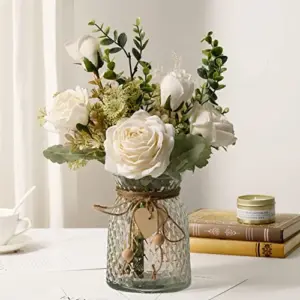
Rather than filling a room with many inexpensive items, luxury design favors fewer, more intentional pieces. One striking mirror, a single well-chosen piece of art, or one beautiful vase will always outperform a shelf crowded with knickknacks.
7.2 Incorporate Fresh Greenery
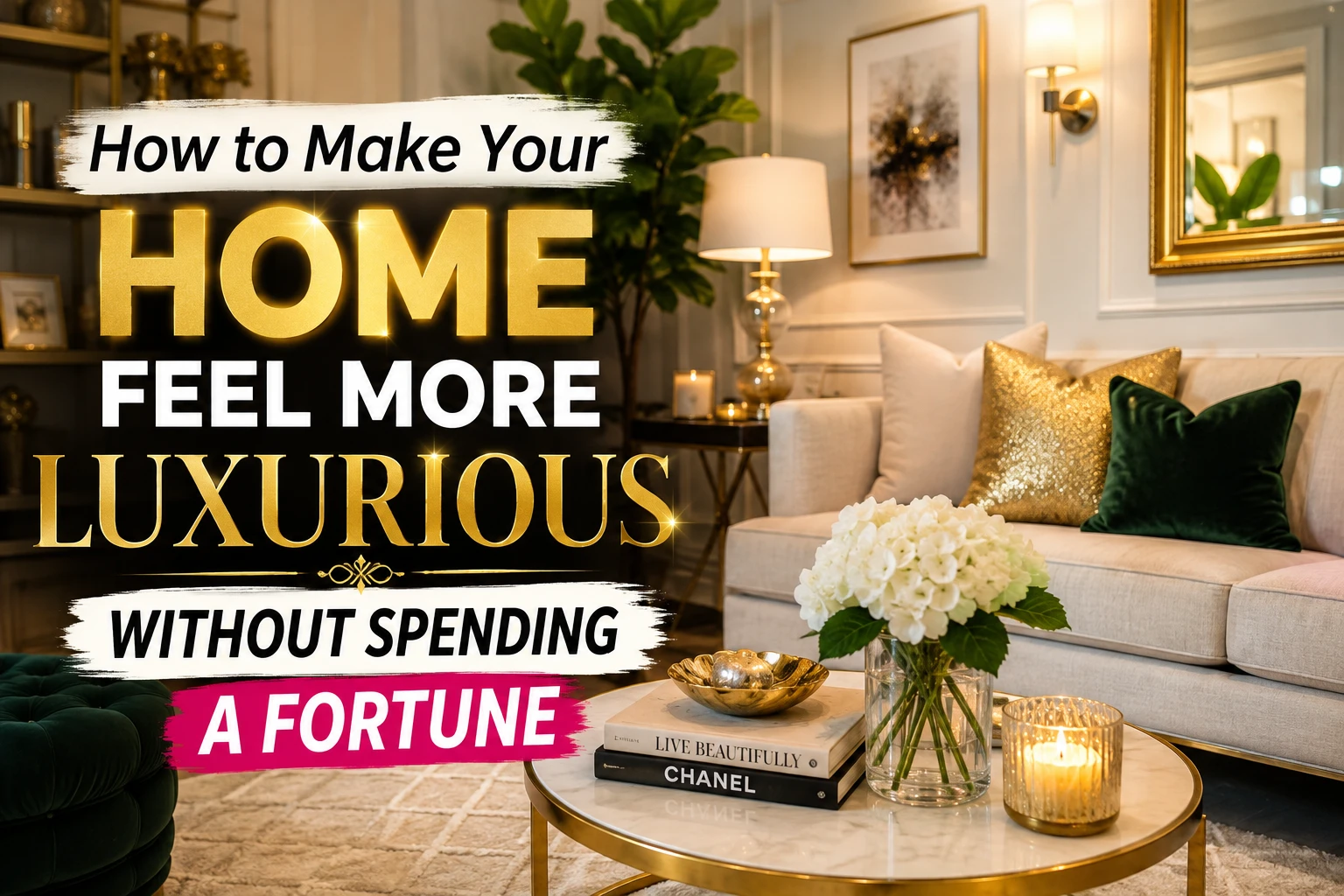
Live plants are one of the fastest, cheapest ways to elevate a space. A few well-placed plants introduce color, texture, and life that artificial decor simply cannot replicate. Even a $5 bunch of fresh flowers refreshed weekly can transform how a room feels.
7.3 Frame and Display Art Properly
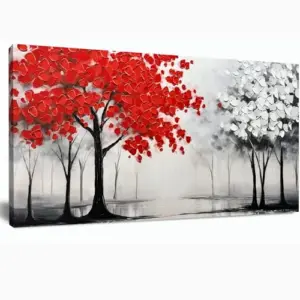
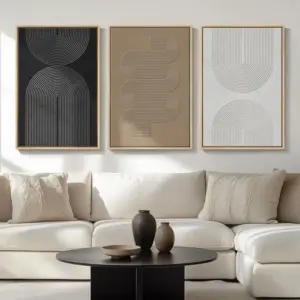
Empty walls feel unfinished; poorly hung art feels careless. Use the “eye-level rule” (center artwork approximately 57–60 inches from the floor) and invest in simple, cohesive frames rather than mismatched ones.
7.4 Make Your Bed Like a Hotel
A flat sheet, tucked hospital corners, and a duvet folded neatly at the foot of the bed, layered with quality pillows, remains one of the single most effective luxury upgrades — and it costs nothing beyond a few minutes each morning.
Part 8: Scent — The Invisible Luxury Signature
High-end hotels and homes are almost universally associated with a signature scent. Smell is deeply tied to memory and perceived quality.
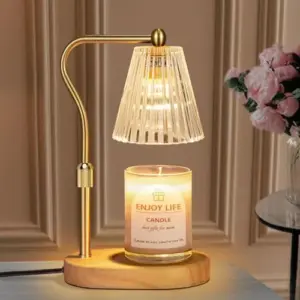
- Invest in a quality candle or reed diffuser in a sophisticated scent family (woody, amber, or fresh linen notes tend to read as “expensive”).
- Eliminate cooking odors, pet smells, and mustiness through regular airing out and cleaning — luxury spaces are, above all, meticulously maintained.
Part 9: The Kitchen — Small Investments, Big Payoff
- Declutter countertops entirely except for one or two beautiful, functional items (a wooden cutting board, a ceramic utensil crock).
- Add open shelving styling with matching dishware if your kitchen allows it.
- Replace old dish towels and sponges with neutral, matching linen towels — an inexpensive detail that quietly signals care and order.
Part 10: The Bathroom — Your At-Home Spa
- Roll towels rather than folding them flat, restaurant-spa style.
- Add a wooden bath tray for styling soap, a candle, and a small plant.
- Replace a shower curtain with a glass panel or a high-quality, weighted linen curtain.
- Introduce a bath mat in a natural material like cotton or bamboo rather than synthetic microfiber.
Part 11: The Bedroom — Sanctuary Design
- Invest in high-thread-count sheets (even one quality set makes a noticeable difference).
- Use a statement headboard — even a simple upholstered or DIY option elevates the entire room.
- Keep nightstands nearly empty, with only a lamp, a small stack of books, and one decorative object.
Part 12: Maintenance — The Ongoing Cost of “Free”
Luxury is not a one-time purchase; it is a standard that is maintained. The single biggest differentiator between a high-end space and a budget space over time is upkeep:
- Regularly laundering linens and towels.
- Wiping down surfaces daily.
- Repairing small issues (a loose handle, a chipped paint edge) before they accumulate.
- Seasonal deep cleaning of windows, baseboards, and light fixtures.
Frequently Asked Questions
What is the cheapest way to make a home look more expensive?
Decluttering and improving lighting are consistently ranked by professional designers as the two highest-impact, lowest-cost strategies available.
Does paint color really make that much of a difference?
Yes. A cohesive, neutral color palette applied consistently throughout a home is one of the most powerful (and affordable) tools for creating a luxurious, cohesive atmosphere.
How much should I budget for a luxury-look refresh?
Many of the strategies above cost under $200 total when implemented gradually — hardware swaps, paint, textiles, and lighting adjustments are all relatively inexpensive compared to full renovations.
What’s the biggest mistake people make when trying to elevate their home?
Adding more items rather than removing them. Luxury is defined as much by what is absent as by what is present.
Conclusion: Luxury Is a Mindset, Not a Budget Line
Creating a home that feels genuinely luxurious has far less to do with your bank balance than it does with your attention to detail, your discipline around clutter, and your willingness to think like a designer rather than a shopper.
By applying the principles outlined in this guide — decluttering, layered lighting, cohesive color, rich texture, updated hardware, thoughtful styling, signature scent, and consistent maintenance — you can create a home that rivals any high-end interior, without the high-end price tag.
Luxury, in the end, is simply the visible result of intention. Start with one room. Start with one drawer. The transformation compounds from there.