

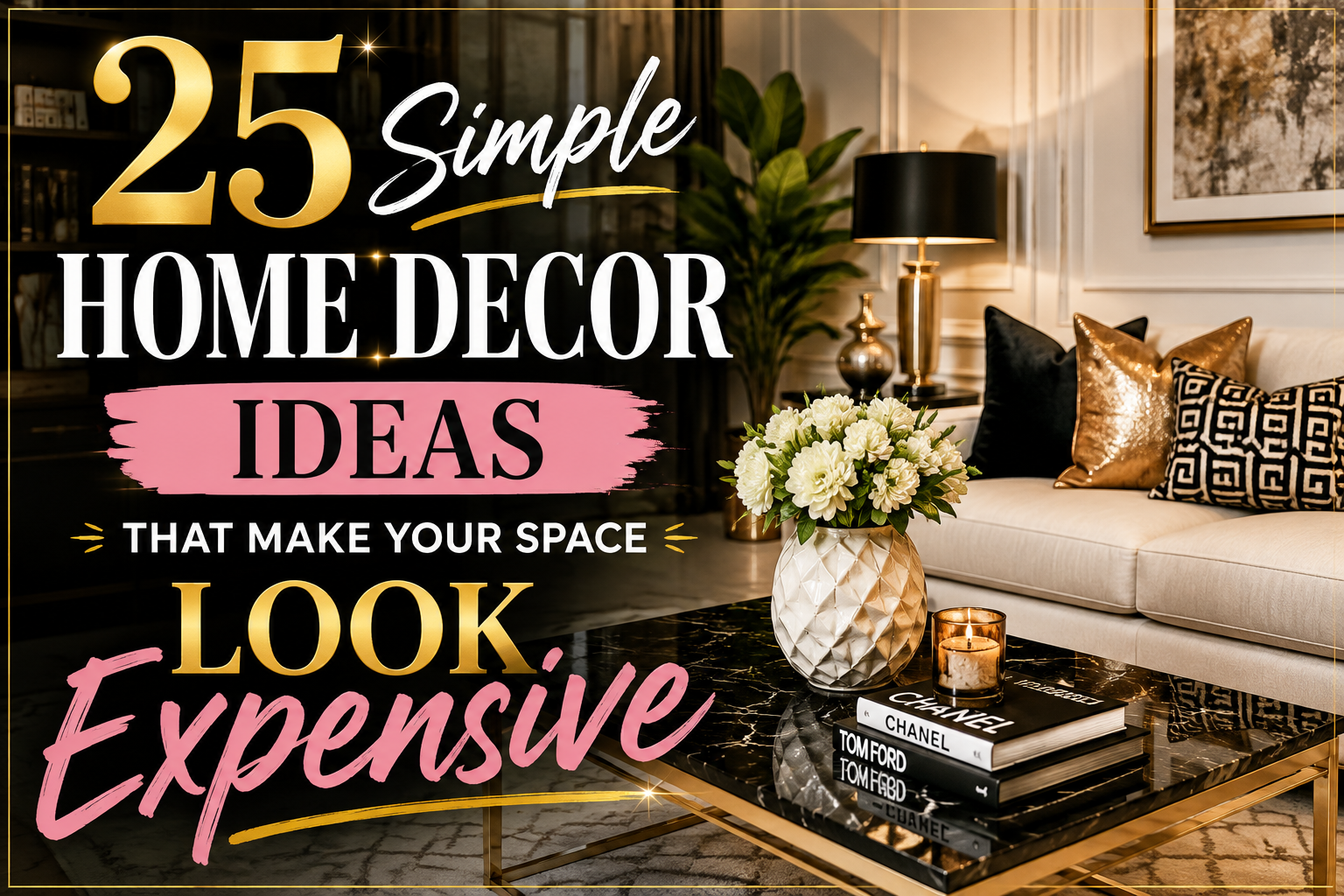
Walk into any high-end home and you’ll notice something interesting: it’s rarely the price tag of individual items that creates the feeling of luxury. It’s the intentionality behind every decision — the way light falls across a room, the way textures play off one another, the way negative space is respected rather than filled out of anxiety.
The good news? You don’t need an interior designer’s budget to achieve that same sense of elevated, expensive-looking style. What you need is a strategic eye, an understanding of design principles that professionals swear by, and a willingness to make a few intentional swaps in your space.
This guide walks you through 25 simple, actionable, and budget-friendly home decor ideas that will transform your home from “thrown together” to “thoughtfully curated” — the kind of space that makes guests ask, “Wait, did you hire a designer?”
Let’s dive in.
1. Embrace a Cohesive Color Palette
Nothing screams “budget decor” louder than a mismatched, chaotic color scheme. Expensive-looking homes almost always follow a restrained, cohesive color palette — typically 2 to 4 core colors that repeat throughout a room or the entire home.
Stick to neutral base tones (think warm whites, soft greiges, and deep charcoals) and introduce one or two accent colors through pillows, art, or accessories. This single decision instantly makes any space feel more curated and professionally designed.
2. Invest in Statement Lighting
Lighting is one of the most underrated luxury upgrades in home design. A generic ceiling fixture or a bare bulb can cheapen even the most beautifully furnished room, while a single statement pendant, chandelier, or sculptural table lamp can elevate the entire space.
You don’t need to spend a fortune — many affordable retailers now offer designer-inspired lighting that mimics high-end silhouettes for a fraction of the cost. Focus on layered lighting: ambient, task, and accent lighting working together to create warmth and dimension.
3. Declutter Ruthlessly
Luxury and clutter cannot coexist. Every designer will tell you the same thing: negative space is a design element, not empty space to be filled. A cluttered room — no matter how expensive the furniture — will always read as chaotic and cheap.
Adopt the philosophy of “less, but better.” Remove anything that doesn’t serve a functional or aesthetic purpose, and you’ll immediately notice your space feels calmer, larger, and significantly more upscale.
4. Upgrade Your Hardware
Cabinet knobs, drawer pulls, door handles, and faucet fixtures are small details with an outsized visual impact. Swapping out dated, plastic, or builder-grade hardware for brushed brass, matte black, or polished nickel finishes is one of the most cost-effective ways to instantly modernize a kitchen, bathroom, or piece of furniture.
5. Layer Your Textiles
Expensive-looking rooms feel tactile and inviting. This is achieved through textile layering — combining different textures like linen, boucle, velvet, and wool throughout a space via throw pillows, blankets, curtains, and rugs.
A flat, single-texture room (all cotton, all polyester) will always feel one-dimensional. Mix it up, and your space will feel rich, dimensional, and intentional.
6. Hang Curtains High and Wide
This is a designer secret that costs nothing extra: mount your curtain rods as close to the ceiling as possible, and extend them beyond the window frame on either side. This simple trick creates the illusion of taller ceilings and larger windows, instantly making the room feel grander and more architecturally impressive.
7. Choose Quality Over Quantity
It’s far better to own fewer, higher-quality pieces than to fill a room with cheap, disposable decor. A single well-made vase, a solid wood side table, or a quality area rug will do more for your space’s perceived value than a dozen dollar-store trinkets.
Think of your home as a curated collection, not a shopping list to fill.
8. Add Fresh Greenery and Florals
Nothing says “budget” faster than fake, dusty plastic plants — and nothing says “luxury” faster than fresh greenery. Incorporate live plants, fresh flowers, or high-quality faux botanicals to bring life, color, and organic texture into your space.
Even a single statement plant in a beautiful ceramic pot can transform a corner from forgettable to photograph-worthy.
9. Create a Gallery Wall with Purpose
Randomly hung frames rarely look expensive — but a thoughtfully curated gallery wall with consistent framing, varied art sizes, and intentional spacing can become a stunning focal point. Stick to a unified color story or frame finish to keep the wall feeling polished rather than chaotic.
10. Invest in a Statement Rug
A high-quality area rug anchors a room and adds an immediate sense of sophistication. Choose a rug that’s appropriately sized for your furniture (a common mistake is buying rugs too small for the space) and opt for natural fibers like wool or jute where possible for that elevated, tactile finish.
11. Use the Rule of Odd Numbers
Interior designers frequently apply the “rule of three” (or other odd numbers) when styling shelves, coffee tables, and vignettes. Grouping items in odd numbers — say, three candles of varying heights, or five books stacked with a small object on top — creates a visually balanced, intentional-looking arrangement far more effective than symmetrical pairs.
12. Paint Your Ceiling
An often-overlooked design move: painting the ceiling a color other than builder-grade white. Whether it’s a deep, moody hue or simply a soft, warm white that complements your walls, a finished ceiling adds an unexpected layer of sophistication that most homes lack — instantly setting yours apart.
13. Swap Out Light Switch and Outlet Covers
It sounds too small to matter, but mismatched or yellowed plastic switch plates are a dead giveaway of neglected details. Replacing them with sleek, matching covers (in a finish that complements your hardware) is an inexpensive fix that contributes to an overall sense of polish.
14. Style Your Bookshelves Like a Designer
Don’t just shove books onto shelves. Curate them. Mix vertical and horizontal stacking, integrate decorative objects, leave breathing room between groupings, and consider color-coordinating book spines or turning some around to show the neutral-toned pages. This transforms a functional shelf into a styled design feature.
15. Add Architectural Details with Molding
Wainscoting, picture rail molding, or wall paneling can add instant architectural interest to a flat, builder-grade wall. Many of these projects are achievable as budget-friendly DIYs using MDF and paint, yet they mimic the custom millwork found in high-end homes.
16. Prioritize Symmetry and Balance
The human eye is naturally drawn to balance. Whether it’s matching nightstands and lamps flanking a bed, or two identical armchairs facing a fireplace, symmetrical arrangements create an immediate sense of order and intentional design — a hallmark of professionally styled spaces.
17. Use Large-Scale Art
One large piece of art almost always looks more expensive than several small, scattered pieces. Oversized artwork creates a focal point and fills wall space in a way that feels gallery-worthy rather than piecemeal. Look for affordable large-format prints or even DIY canvas projects to achieve this effect on a budget.
18. Bring in Metallics — Sparingly
A touch of brass, gold, or warm bronze through frames, lighting, or small accessories introduces a subtle sense of glamour. The key word is subtly — overdoing metallics can tip a space into gaudy territory. Aim for one consistent metal tone throughout the room.
19. Make Your Bed Like a Hotel
A beautifully made bed with layered linens — a duvet, a top sheet fold, multiple pillow sizes, and a textured throw at the foot — instantly elevates a bedroom to hotel-level luxury. This is one of the highest-impact, lowest-cost changes you can make in your entire home.
20. Incorporate Vintage or Antique Pieces
Nothing communicates timeless taste quite like a single vintage or antique find — a weathered wooden trunk, an ornate mirror, or a mid-century chair. These pieces bring character and history into a space in a way that mass-produced, brand-new furniture simply cannot replicate. Thrift stores, estate sales, and online marketplaces are goldmines for these finds.
21. Define Zones with Furniture Placement
In open-concept spaces, expensive-looking homes use furniture to define zones rather than pushing everything against the walls. Float your furniture, use rugs to anchor seating areas, and create intentional “rooms” within a larger space. This design approach is a favorite among professional stagers and designers alike.
22. Choose Matte Finishes Over Glossy Plastic
Matte finishes — on walls, furniture, and decor — read as more sophisticated and expensive than shiny, glossy plastic surfaces. When shopping for new decor items, prioritize natural materials and matte textures: unlacquered brass, matte ceramics, and raw wood finishes.
23. Add Scent to Your Space
High-end hotels and luxury retail spaces are famous for their signature scents — and your home can borrow this trick too. A quality candle, reed diffuser, or essential oil diffuser adds a sensory layer of luxury that’s often the missing “invisible” ingredient in an otherwise beautiful room.
24. Frame Your Mirrors
A frameless, builder-grade mirror is one of the fastest ways to date a bathroom or entryway. Adding a framed mirror — or applying a peel-and-stick frame kit directly over an existing mirror — is a low-cost weekend project with an outsized visual payoff.
25. Edit Seasonally
Finally, the most expensive-looking homes are never static. They’re edited and refreshed seasonally — swapping out throw pillow colors, rotating artwork, or bringing in seasonal greenery. This ongoing curation signals that a home is actively cared for, which subconsciously reads as luxurious to anyone who walks through the door.
Final Thoughts: Expensive Style Is a Mindset, Not a Budget
The biggest myth in home decor is that a luxurious, expensive-looking space requires a luxurious, expensive budget. As this list demonstrates, the truth is far more empowering: an expensive look comes from thoughtful choices — cohesive colors, quality over quantity, intentional styling, and an eye for detail — not from how much money you spend.
Start with just two or three ideas from this list — perhaps upgrading your lighting and decluttering ruthlessly — and build from there. Over time, these small, strategic changes compound into a home that feels elevated, intentional, and unmistakably high-end, no matter your budget.
Your dream home isn’t a matter of if — it’s a matter of which idea you’ll try first.