

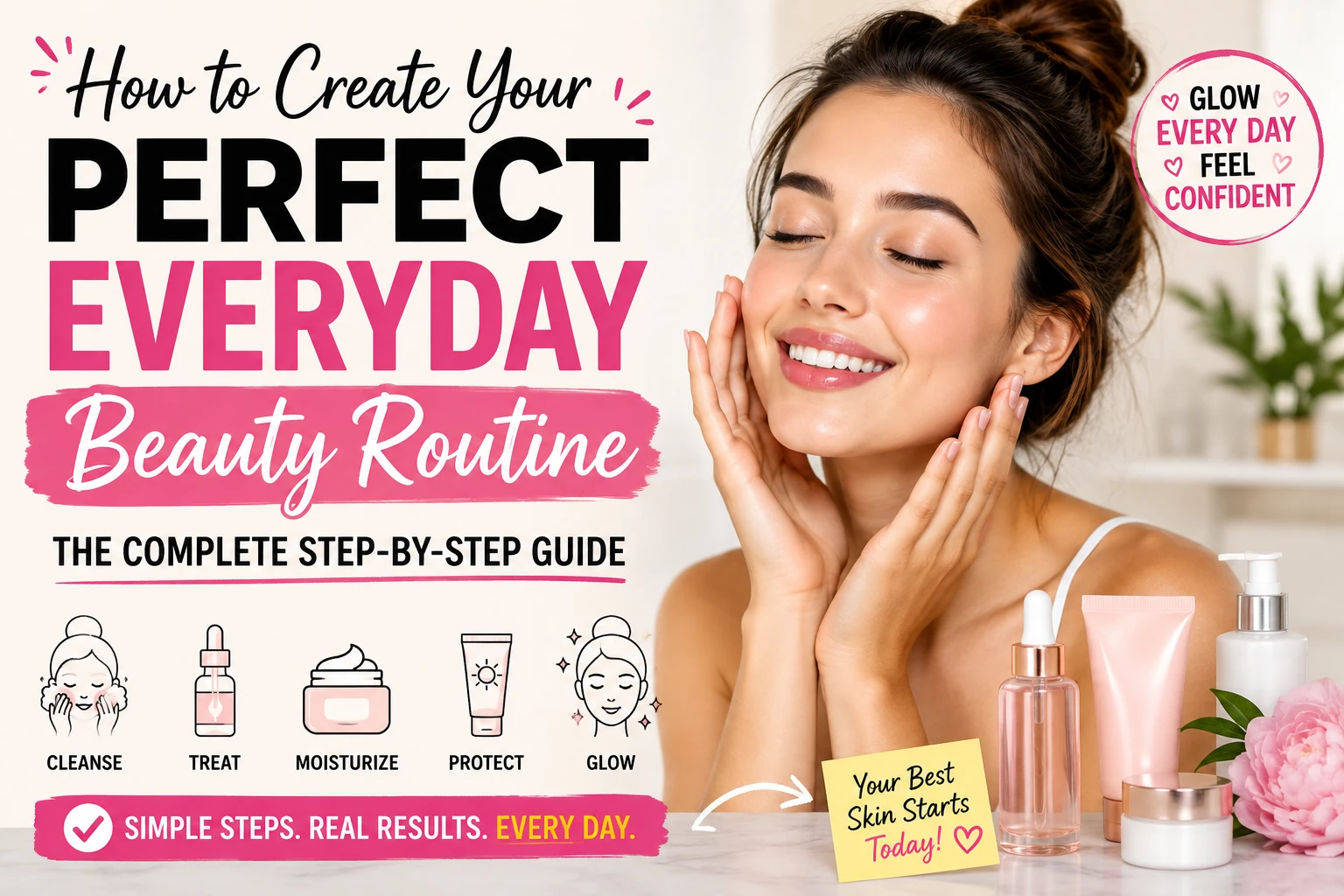
Every morning, millions of people stand in front of their mirrors, unsure of what their skin, hair, and body actually need.
They follow trends they saw on social media, buy products because of flashy packaging, or simply skip their routine altogether because it feels overwhelming, time-consuming, or confusing. Sound familiar?
The truth is, a truly effective everyday beauty routine isn’t about owning the most expensive products or following a 12-step Korean skincare regimen you saw online.
It’s about understanding your unique skin type, your lifestyle, your budget, and your long-term goals — and building a sustainable system around them.
In this comprehensive guide, we’re going to walk you through exactly how to create a beauty routine that works for you, not against you.
We’ll cover everything from skincare fundamentals and haircare essentials to body care, makeup application, and the lifestyle habits that quietly make or break your results.
By the end of this article, you’ll have a clear, actionable blueprint for glowing skin, healthy hair, and unshakable confidence — every single day.
Let’s dive in.
1. Understanding Your Skin Type: The Foundation of Everything
Before you buy a single product, you need to understand the canvas you’re working with. Your skin type determines everything — which cleansers you should use, whether you need a heavier or lighter moisturizer, and how your skin will react to active ingredients like retinol or vitamin C.
There are five primary skin types:
- Normal skin — balanced, neither too oily nor too dry, with minimal sensitivity
- Oily skin — excess sebum production, often prone to shine, enlarged pores, and breakouts
- Dry skin — lacks natural oils, often feels tight, flaky, or rough
- Combination skin — oily in the T-zone (forehead, nose, chin) but normal or dry elsewhere
- Sensitive skin — prone to redness, irritation, and reactions to certain ingredients
How to identify your skin type at home: Wash your face with a gentle cleanser, pat it dry, and wait 30 minutes without applying anything. If your skin feels tight and flaky, you likely have dry skin. If it looks shiny all over, you probably have oily skin. Shine only in the T-zone points to combination skin, while a comfortable, balanced feel suggests normal skin.
Once you know your skin type, every other decision in your beauty routine becomes significantly easier.
2. The Non-Negotiable Morning Skincare Routine
Your morning routine exists for one primary purpose: protection. You’re preparing your skin to face pollution, sun exposure, and environmental stressors throughout the day.
Step 1: Gentle Cleansing
Start with a gentle, sulfate-free cleanser to remove overnight sweat and oil buildup without stripping your skin’s natural barrier. Over-cleansing is one of the most common mistakes people make — your morning cleanse should be quick and gentle, not aggressive.
Step 2: Antioxidant Serum
Applying a vitamin C serum in the morning is one of the single most impactful things you can do for long-term skin health. Vitamin C brightens skin tone, fights free radical damage, and boosts collagen production, giving your skin a natural, radiant glow.
Step 3: Hydration Layer
Follow with a lightweight, hydrating moisturizer suited to your skin type. Look for ingredients like hyaluronic acid, glycerin, or ceramides, which lock in moisture without clogging pores.
Step 4: Sunscreen — The Single Most Important Step
If you take away only one lesson from this entire article, let it be this: sunscreen is non-negotiable. A broad-spectrum SPF 30 or higher protects against premature aging, hyperpigmentation, and skin cancer. No anti-aging serum, no matter how expensive, can undo the damage of unprotected sun exposure.
3. The Essential Nighttime Skincare Routine
While your morning routine protects, your nighttime routine repairs and rejuvenates. This is when your skin does its most important regenerative work, making it the ideal time to introduce active, results-driven ingredients.
Step 1: Double Cleansing
If you wear makeup or sunscreen, double cleansing — starting with an oil-based cleanser followed by a water-based one — ensures every trace of product, dirt, and pollution is fully removed.
Step 2: Exfoliation (2-3 Times Per Week)
Gentle exfoliation using AHAs (glycolic or lactic acid) or BHAs (salicylic acid) removes dead skin cells, unclogs pores, and reveals brighter, smoother skin underneath. Over-exfoliating, however, can damage your skin barrier, so moderation is key.
Step 3: Targeted Treatment
This is where retinol, niacinamide, or peptides come in, depending on your specific skin concerns:
- Retinol for fine lines, texture, and acne
- Niacinamide for redness, pores, and oil control
- Peptides for firmness and elasticity
Step 4: Rich Moisturizer
Nighttime calls for a thicker, more nourishing moisturizer than your daytime option, since your skin isn’t fighting environmental stressors and can fully absorb reparative ingredients.
Step 5: Eye Cream
The skin around your eyes is thinner and more delicate, making it prone to early signs of aging. A dedicated eye cream targets dark circles, puffiness, and fine lines specifically in this sensitive area.
4. Weekly Treatments That Amplify Your Results
Beyond your daily routine, incorporating weekly treatments accelerates results significantly:
- Face masks (hydrating, clarifying, or brightening depending on your needs)
- Chemical peels for deeper exfoliation and texture improvement
- Facial massage or gua sha to boost circulation and reduce puffiness
- Overnight sleeping masks for intense hydration recovery
These treatments aren’t strictly necessary, but they add a noticeable boost to your overall results when used consistently.
5. Building a Haircare Routine That Actually Works
Your hair deserves the same level of thoughtful care as your skin. A proper haircare routine starts with understanding your hair type — straight, wavy, curly, or coily — and your specific concerns, such as dryness, oiliness, frizz, or damage.
Core Haircare Steps:
- Shampoo based on your scalp’s needs, not just your hair length
- Conditioner applied mid-length to ends, avoiding the scalp to prevent excess oil buildup
- Weekly deep conditioning treatment or hair mask for intense moisture repair
- Heat protectant applied before any styling tool use — this single step dramatically reduces long-term damage
- Regular trims every 6-8 weeks to prevent split ends from traveling up the hair shaft
Pro tip: Silk or satin pillowcases reduce friction while you sleep, minimizing breakage and frizz — a small change with a surprisingly noticeable impact.
6. Body Care: The Most Overlooked Beauty Step
Most beauty routines stop at the neck, but your body deserves equal attention. A complete beauty routine includes:
- Exfoliating body scrub 1-2 times weekly to remove dead skin and prevent ingrown hairs
- Rich body lotion or body butter applied immediately after showering while skin is still damp, to lock in maximum hydration
- SPF on exposed skin, not just your face
- Hand and foot care, including regular moisturizing and nail maintenance
Neglecting body care is one of the most common oversights — yet it’s often the difference between skin that merely looks good and skin that feels and looks luxuriously healthy.
7. Makeup as Enhancement, Not a Mask
Your makeup routine should enhance your natural features, not hide them. The healthier your skin becomes through consistent skincare, the less makeup you’ll actually need — and the better it will look when you do wear it.
Building a Minimalist, High-Impact Makeup Routine:
- Lightweight tinted moisturizer or BB cream instead of heavy foundation for daily wear
- Cream blush for a natural, dewy flush
- Mascara to open up the eyes instantly
- Tinted lip balm or a good lip oil for effortless color and hydration
- Concealer only where truly needed, rather than all-over coverage
This approach saves time every single morning while still giving you a polished, put-together look.
8. The Lifestyle Factors That Make or Break Your Beauty Routine
No skincare product, regardless of price, can outperform poor lifestyle habits. If you want your beauty routine to actually work, these factors matter just as much as your products:
- Hydration: Drinking adequate water daily directly impacts skin elasticity and clarity
- Sleep: 7-9 hours of quality sleep allows your skin to repair and regenerate overnight
- Diet: A diet rich in antioxidants, healthy fats, and vitamins supports skin from the inside out
- Stress management: Chronic stress triggers hormonal changes that worsen acne, dullness, and premature aging
- Exercise: Regular movement boosts circulation, delivering oxygen and nutrients to skin cells
Think of your topical routine and your lifestyle habits as two halves of the same equation — neglect one, and the other’s effectiveness drops significantly.
9. How to Customize Your Routine by Budget
A common myth is that an effective beauty routine requires expensive products. This simply isn’t true.
Budget-Friendly Routine Essentials:
- Gentle cleanser
- Basic moisturizer
- Broad-spectrum sunscreen
- Affordable vitamin C or niacinamide serum
Mid-Range Additions:
- Targeted treatment serums (retinol, peptides)
- Quality exfoliants
- Weekly masks
Luxury Enhancements:
- Professional-grade treatments
- Advanced delivery-system serums
- In-office facials or dermatologist visits
The key takeaway: consistency with basic products will always outperform inconsistency with expensive ones.
10. Common Beauty Routine Mistakes to Avoid
- Over-exfoliating, which damages the skin barrier and causes irritation
- Skipping sunscreen on cloudy days or when staying indoors near windows
- Layering too many active ingredients at once, causing sensitivity and breakouts
- Switching products too frequently, preventing your skin from adjusting and showing results
- Ignoring patch testing new products before full application
- Sleeping in makeup, which clogs pores and accelerates aging
Avoiding these mistakes alone can dramatically improve your results, even without adding a single new product.
11. Building Consistency: The Real Secret to Beautiful Skin
Here’s the truth that no product marketing will tell you: consistency outperforms complexity every single time. Skin cell turnover takes approximately 28 days on average (and longer as we age), meaning visible results from any new routine typically take 4-8 weeks to become apparent.
The people with the most enviable skin and hair aren’t necessarily using the most advanced products — they’re the ones who show up for their routine every single day, rain or shine, tired or energized. Building this habit is more valuable than any single product you could buy.
12. Frequently Asked Questions
How long does it take to see results from a new beauty routine?
Most people begin noticing improvements within 4-8 weeks of consistent use, though some benefits (like hydration) can appear within days.
Do I really need both a morning and evening routine?
Yes. Your morning routine focuses on protection, while your evening routine focuses on repair — they serve fundamentally different purposes.
Can I skip sunscreen if my moisturizer has SPF?
Only if it provides broad-spectrum SPF 30 or higher and is applied generously — most moisturizers with SPF don’t meet the amount needed for full protection.
How many products should a beginner beauty routine include?
Start simple: cleanser, moisturizer, and sunscreen. Add targeted treatments gradually as your skin adjusts.
Is it necessary to use different products for morning and night?
Not always, but ingredients like retinol should only be used at night, as they increase sun sensitivity.
Final Thoughts: Your Beauty Routine Is a Long-Term Investment
Creating your perfect everyday beauty routine isn’t about chasing trends or accumulating an overflowing shelf of products. It’s about understanding your unique needs, choosing quality over quantity, and — above all — showing up consistently.
Start simple. Build gradually. Pay attention to how your skin and hair respond. And remember: the most beautiful, radiant results come not from a single miracle product, but from the quiet, consistent care you give yourself every single day.
Your best skin, hair, and confidence are not a destination — they’re the natural result of a routine you actually stick to.