

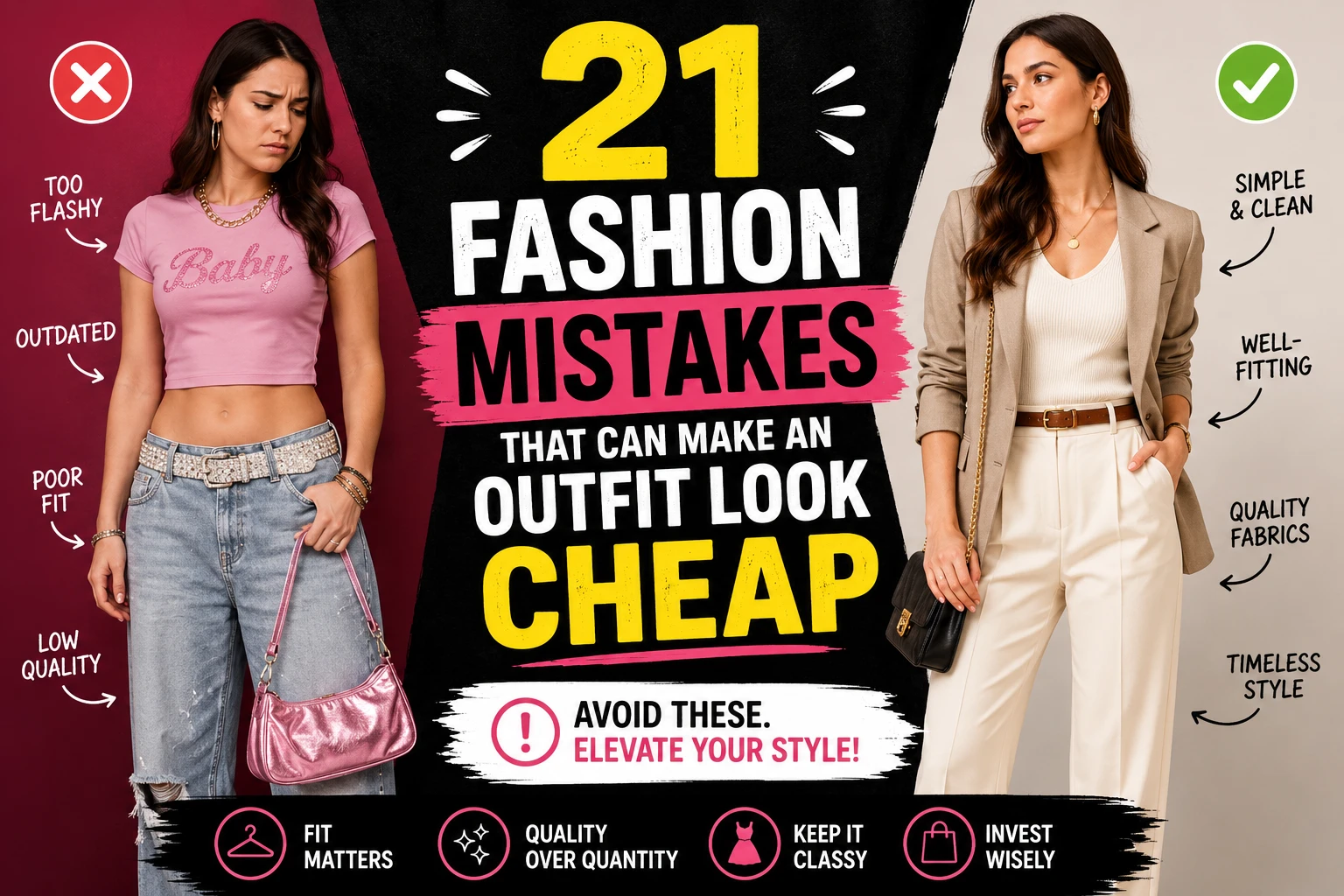
Have you ever noticed how two people can wear outfits that cost roughly the same amount of money, yet one looks effortlessly polished and expensive while the other looks careless and cheap? The difference rarely comes down to the price tag.
In fact, the perception of expense in fashion has very little to do with how much you actually spend and everything to do with the small, often-overlooked details that separate a put-together look from a sloppy one.
Understanding these details is the key to transforming your wardrobe without transforming your bank account. Below, we break down 21 critical fashion mistakes that make outfits look inexpensive, along with actionable solutions to correct each one.
Whether you’re building a professional wardrobe, refining your everyday style, or simply want to look more polished, this guide will help you avoid the pitfalls that undermine an otherwise great outfit.
1. Wearing Ill-Fitting Clothes
The single biggest culprit behind a cheap-looking outfit is poor fit. Clothing that is too tight, too loose, too long, or too short disrupts the silhouette of the body and creates a sloppy, unfinished impression — regardless of how much the garment cost.
The Fix: Invest in tailoring. A $30 shirt tailored to fit your body will always look more expensive than a $300 shirt that hangs off your frame incorrectly. Find a reliable tailor and make adjusting hems, waists, and sleeves a regular part of your shopping routine.
2. Choosing the Wrong Fabric
Cheap, synthetic fabrics such as low-grade polyester, acrylic, and stiff rayon blends tend to look shiny, pill quickly, and hang unnaturally on the body. These materials often signal low quality from a distance.
The Fix: Prioritize natural fibers like cotton, wool, silk, and linen, or high-quality blends that mimic the drape and texture of natural materials. Learn to read fabric labels before purchasing.
3. Ignoring Proportion and Body Balance
An outfit that ignores proportion — such as pairing oversized tops with oversized bottoms, or wearing a cropped jacket with high-waisted trousers that create an awkward midsection — throws off the entire visual balance of the body.
The Fix: Balance loose garments with fitted ones. If your top is voluminous, opt for a slimmer bottom, and vice versa.
4. Overdoing Logos and Branding
Excessive, obvious logo placement can read as an attempt to broadcast a brand name rather than showcase personal style, which often cheapens the overall look — even when the item is genuinely expensive.
The Fix: Choose subtle branding or logo-free pieces. Let the cut, fabric, and styling speak for the quality of the garment instead.
5. Wearing Too Many Trends at Once
Piling on every micro-trend simultaneously — chunky sneakers, oversized blazers, statement bags, bold prints — creates visual chaos rather than a cohesive, elevated look.
The Fix: Practice the “one statement piece” rule. Select a single trend-forward item and let the rest of the outfit act as a neutral supporting cast.
6. Neglecting Shoe Quality and Condition
Shoes are one of the first things people notice, and scuffed, worn-out, or poorly maintained footwear can undermine an otherwise polished outfit instantly.
The Fix: Keep shoes clean, polished, and in good repair. Rotate footwear to avoid excessive wear, and invest in a quality shoe-care kit.
7. Mismatched Metals in Accessories
Wearing gold and silver jewelry carelessly together, or mixing metal tones inconsistently across a belt buckle, watch, and jewelry, can create a disjointed, low-effort appearance.
The Fix: Choose one dominant metal tone for your accessories, or mix intentionally with a clear ratio (for example, 80% gold, 20% silver) for a curated, deliberate look.
8. Overuse of Fast Fashion Basics
While fast fashion has its place, relying entirely on ultra-low-cost basics — particularly in areas like T-shirts, denim, and outerwear — often results in visible fabric pilling, color fading, and shape distortion after minimal wear.
The Fix: Reserve fast fashion for trend pieces you’ll wear briefly, and invest more in wardrobe staples that endure repeated wshing and wear.
9. Visible Logos on Undergarments or Loungewear Bleeding Into Outerwear
Allowing waistbands, bra straps, or loungewear branding to peek out beneath outer layers unintentionally reads as careless rather than casually cool.
The Fix: Choose seamless, neutral-toned undergarments and ensure loungewear stays separate from your outerwear wardrobe.
10. Wrinkled or Poorly Maintained Clothing
Wrinkles, stains, pilling, and loose threads are among the fastest ways to make any garment — no matter the brand — look inexpensive and neglected.
The Fix: Steam or iron garments before wearing, address stains immediately, and inspect clothing regularly for small repairs like loose buttons or fraying hems.
11. Choosing the Wrong Bag for the Occasion
Carrying an overly casual bag — such as a worn backpack or novelty tote — with formal or business attire creates a jarring visual mismatch that undercuts the sophistication of the outfit.
The Fix: Match your bag’s formality level to your outfit. Structured leather or leather-look bags typically elevate looks across most occasions.
12. Excessive or Mismatched Prints
Combining multiple loud, clashing prints without a unifying color palette can overwhelm an outfit and create visual noise rather than intentional style.
The Fix: Limit prints to one focal piece per outfit, and build the remainder of the look around solid, complementary colors.
13. Wearing the Wrong Bra or Undergarments
Improperly fitted undergarments can distort the silhouette of an outfit, creating visible lines, bulges, or straps that detract from the overall polish of the look.
The Fix: Get properly fitted for undergarments, and choose seamless or nude-toned options designed for the specific garment being worn.
14. Overloading on Accessories
Wearing too many accessories simultaneously — multiple necklaces, bracelets, rings, and bold earrings all at once — can overwhelm an outfit and make it look cluttered rather than curated.
The Fix: Follow the principle of editing before leaving the house — remove one accessory before walking out the door to maintain a refined, intentional look.
15. Wearing Clothes That Don’t Suit Your Skin Tone
Certain colors can wash out or clash with an individual’s skin undertone, making even well-fitted, high-quality clothing look unflattering and mismatched.
The Fix: Identify your color season or undertone (warm, cool, or neutral) and prioritize colors that complement your complexion.
16. Ignoring Seasonal Appropriateness
Wearing heavy fabrics in summer or thin, lightweight fabrics in winter disrupts the visual harmony of an outfit and can appear mismatched to the setting, regardless of style.
The Fix: Build a wardrobe with season-appropriate fabric weights, and layer strategically to maintain both comfort and aesthetic coherence.
17. Overexposed Skin in the Wrong Context
Excessive exposure — particularly in professional or formal settings — can shift attention away from the outfit’s craftsmanship and toward the amount of skin shown, often reading as less polished.
The Fix: Reserve more revealing pieces for appropriate social settings, and prioritize tailored coverage for professional or formal contexts.
18. Cheap-Looking Hair and Grooming Choices
An outfit’s perceived value is deeply tied to overall grooming — unkempt hair, chipped nail polish, or neglected skincare can undercut even the most expensive clothing choices.
The Fix: Maintain a consistent grooming routine, including regular haircuts, skincare, and nail care, to complement your clothing choices.
19. Wearing Clothes That Are Visibly Out of Trend
Clothing styles that are noticeably outdated — think overly specific past-decade silhouettes or dated prints — can make an outfit look thrown-together rather than intentionally vintage or retro.
The Fix: If wearing vintage or retro pieces, style them deliberately with modern elements to signal intentional fashion choices rather than accidental datedness.
20. Poor Color Coordination
Randomly combining colors without regard to a cohesive color palette is one of the fastest ways to make an outfit look thrown together and inexpensive.
The Fix: Learn basic color theory — complementary, analogous, and monochromatic schemes — to build outfits that feel deliberate and elevated.
21. Neglecting the Details: Buttons, Zippers, and Hardware
Cheap plastic buttons, flimsy zippers, and low-quality hardware are subtle but telling signs of a lower-quality garment, even when the overall design looks appealing at first glance.
The Fix: Inspect hardware closely before purchasing. Metal buttons, sturdy zippers, and quality clasps are often signals of better craftsmanship and durability.
Final Thoughts: Elevating Your Style Without Overspending
Looking expensive isn’t about how much you spend — it’s about how much attention you pay to fit, fabric, proportion, maintenance, and coordination.
By avoiding these 21 common fashion mistakes, you can transform even a modest wardrobe into a collection of outfits that consistently look polished, intentional, and elevated.
Small adjustments — proper tailoring, quality fabric choices, thoughtful accessorizing, and consistent grooming — compound over time to create a lasting impression of sophistication. Fashion, at its core, rewards attention to detail far more than it rewards spending power.
Start implementing these fixes today, and watch how quickly your everyday outfits begin to reflect the elevated, expensive aesthetic you’ve been striving for.